

Real Estate Investors Montreal

Real Estate Investors Montreal
Practical guidance for first-time, scaling, and out-of-province investors buying in Montréal—plex, condos, rentals, and value-add opportunities—without hype or guarantees.
You’re likely here because one (or more) of these feels familiar:
- Deals look “good” until the real numbers appear (repairs, vacancy, financing, rent rules).
- Montréal inventory moves quickly and it’s hard to know what’s truly investable.
- You want to invest, but you do not want a legal/tenant/renovation surprise.
What you want instead: a repeatable process to evaluate properties, manage risk, and make decisions with confidence.
Disclaimer: This is general information, not tax/financial advice. Confirm your situation with CRA and a qualified professional.
First-time Real Estate Investors
You want your first Montréal investment property and need a clear framework—property type, neighbourhood fit, financing assumptions, and risk controls.
Scaling investors
You already own real estate and want to add doors intelligently (plex, small multi-family, value-add, new build) while tightening underwriting and operational risk.
Out-of-province investors
You want local market execution—shortlists that match your criteria, clean due diligence, and negotiation strategy that reflects Montréal realities.
Who this page is for

Investment property types in Montréal (neutral, deal-driven)
Below are common paths investors consider in Montréal. The “right” one depends on your cash position, risk tolerance, time horizon, and operational appetite.
Plex: duplex / triplex / small multi-family
Often attractive for investors seeking:
- Multiple income streams in one asset
- Potential for long-term wealth building
- Value-add or optimization over time (where appropriate and compliant)
Condos (rental-oriented)
Often considered when you want:
- Lower maintenance burden (relative to older plex stock)
- Simpler unit turnover (varies by building rules, location, and market conditions)
- A more “hands-off” ownership style (still requires proper screening and budgeting)
Single-family rentals
Common for investors prioritizing:
- Wider buyer demand in resale
- Family-tenant profile (market-dependent)
- Renovation/value-add strategies (subject to permits, budgets, and realistic timelines)
New build opportunities
Typically pursued when you want:
- Lower near-term repair risk (not zero)
- Modern building systems
- Potentially easier insurance/financing underwriting (case-by-case)
Value-add / renovation projects
Best suited for investors who can handle:
- Renovation uncertainty and timeline risk
- Capital planning discipline
- Conservative underwriting (contingency buffers matter)
Short-term rental considerations
This can be highly rule- and location-sensitive (building bylaws, municipal rules, provincial requirements). If short-term rental is on your radar, the process must include a compliance-first screen before you underwrite anything.
A practical Montréal investor lens: what commonly moves the needle
This is not a promise of returns. It is a list of execution drivers investors typically use to reduce uncertainty:
- Conservative underwriting (repairs, vacancy, interest rate sensitivity)
- Tenant/rental rule awareness and realistic rent assumptions (Montréal/Québec has specific landlord-tenant frameworks; you must treat this as a risk category, not an afterthought)
- Building condition diligence (roof, foundations, brickwork, plumbing, electrical, drainage)
- Insurance and operating cost reality checks
- Exit strategy clarity (hold, refinance, resale, or reposition)
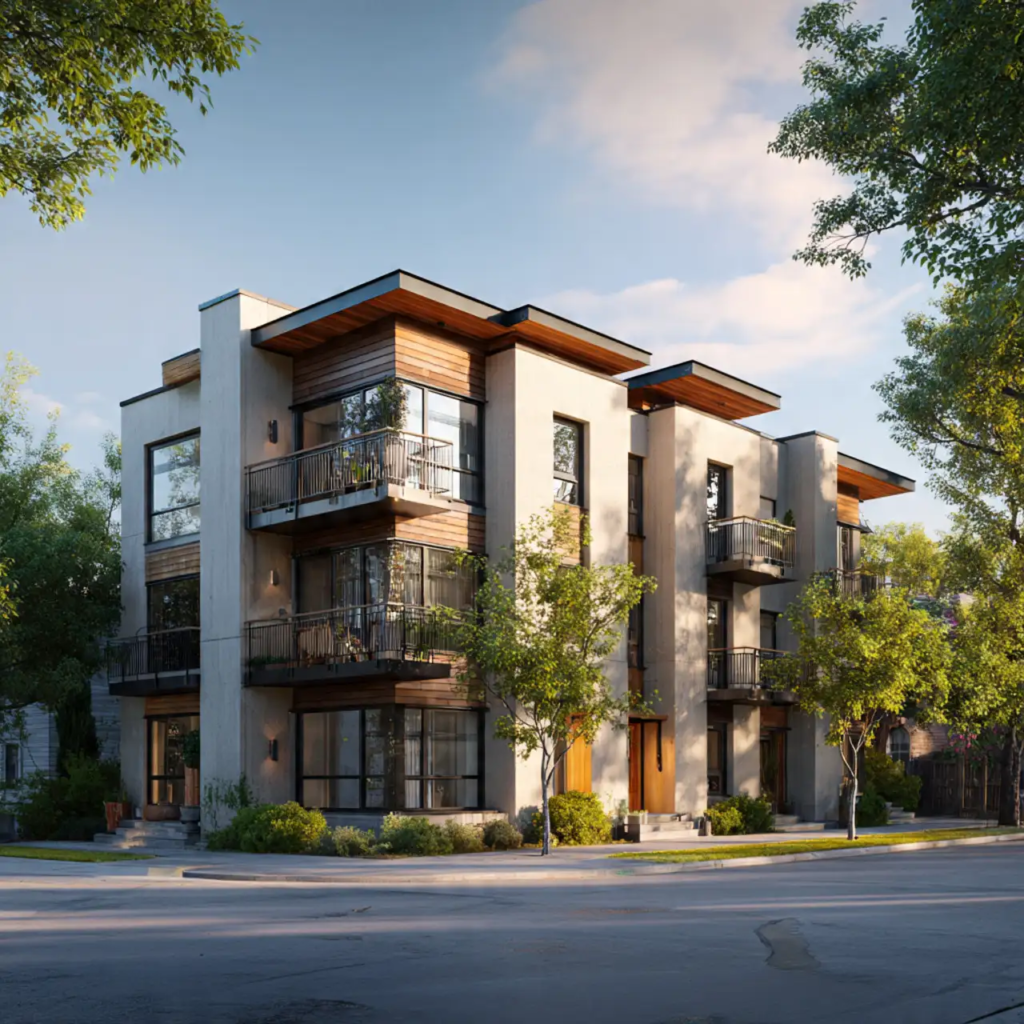
How I help Real Estate Investors in Montreal
I work as a Montréal real estate broker with an investor mindset: process, risk control, negotiation, and clean execution.
1) Define your “buy box” (deal criteria)
We translate your goals into measurable filters:
- Property type(s): plex / condo / single-family / small multi-family
- Target price band and down payment scenario
- Minimum acceptable cash-flow cushion (or growth-first profile)
- Renovation appetite and timeline tolerance
- Exit strategy assumptions
3) Due diligence coordination (risk-first)
A structured approach that typically includes:
- Comparable sales logic
- Building/maintenance red flags checklist
- Document review priorities (where available)
- Conditions strategy that protects you without overcomplicating the offer
2) Deal screening (fast, disciplined triage)
You do not need 50 showings—you need 5–10 good candidates that survive the first-pass math and risk checks.
4) Negotiation and offer strategy
Montréal is nuanced: clean terms, credible positioning, and timing matter.
5) Closing coordination
From accepted offer to notary day, we keep timelines and deliverables controlled.
Financing basics investors often overlook (Canada-wide + Montréal realities)
Financing rules vary by lender and borrower profile. A few widely referenced baselines:
- For small rental loans (non-owner occupied) on 2–4 units, CMHC notes an 80% loan-to-value maximum and a minimum equity requirement of 20% for certain insured rental products.
- Minimum down payment concepts (consumer baseline) are also summarized by the Government of Canada’s financial consumer guidance.
- Rental income treatment in qualification can differ; CMHC describes approaches that may include a portion of gross rental income in debt service calculations (program- and lender-dependent).
Practical investor takeaway: you should underwrite a deal with conservative financing assumptions and confirm qualification mechanics directly with a licensed mortgage professional.

Montréal investor due diligence checklist
Use this as a starting framework:
Property + building condition
- Roof age/condition, brick façade, foundation signs, drainage
- Plumbing (type/age), electrical capacity/panel, heating system condition
- Past major work documentation (what, when, by whom)
- Budget for CapEx and “unknown unknowns” (contingency)
Income and operating expenses
- Rent roll realism (avoid aggressive assumptions)
- Vacancy buffer and turnover cost
- Insurance, taxes, utilities (if landlord-paid), maintenance, management
Rental rule awareness (Québec / TAL)
Québec’s landlord-tenant environment and rent setting mechanisms are a core risk category. TAL provides tools and information related to rent increase calculation and rent setting criteria. TAL also publishes context on rent adjustment outcomes over time (useful for understanding the environment).
Exit strategy
- If rates rise, can the deal still hold?
- If repairs cost more than expected, do you still have reserves?
- If you needed to sell in 12–24 months, is marketability strong?

Common investor mistakes in Montréal (and how to avoid them)
- Overestimating rent growth and underestimating operating costs.
- Under-budgeting CapEx, especially in older plex stock.
- Ignoring tenant/rent rule risk until after you purchase—this should be part of your underwriting model from day one.
- Assuming financing will “work out later.” Get lender alignment early.
- Buying outside your operational capacity (renovation scope, distance, time availability).
Montréal-wide, neutral approach to neighbourhoods
Rather than calling areas “the best,” a safer investor method is to evaluate:
- Rental demand signals (transport, employment nodes, institutions)
- Building stock quality (age, renovation patterns)
- Price-to-rent relationship (deal-by-deal)
- Liquidity (ease of resale) and tenant profile fit
FAQ: Real Estate Investors Montreal
Do duplex/triplex deals still work in Montréal?
They can—if the numbers and risk controls work. Montréal requires conservative underwriting (repairs, vacancy, financing, and tenant/rental rule awareness).
What down payment should I expect for an investment property?
It depends on owner-occupied vs. non-owner-occupied, number of units, and lender policy. CMHC outlines that certain small rental (non-owner occupied) 2–4 unit scenarios may require 20% minimum equity (program-dependent).
I live outside Québec—can I still buy in Montréal?
Yes. The key is execution: local viewing strategy (or trusted representation), document discipline, and a clear operations plan (tenanting/management/maintenance).
Is this financial or legal advice?
No. This page provides general information only and is not financial, tax, or legal advice. Always consult qualified professionals for advice specific to your situation.
Compliance and disclaimer
General information only. This content is provided for educational purposes and does not constitute financial, tax, or legal advice. Real estate investing involves risk, and outcomes vary. Consult qualified professionals (mortgage, accounting, legal, inspection) before making decisions. No guarantees of results are made or implied.